


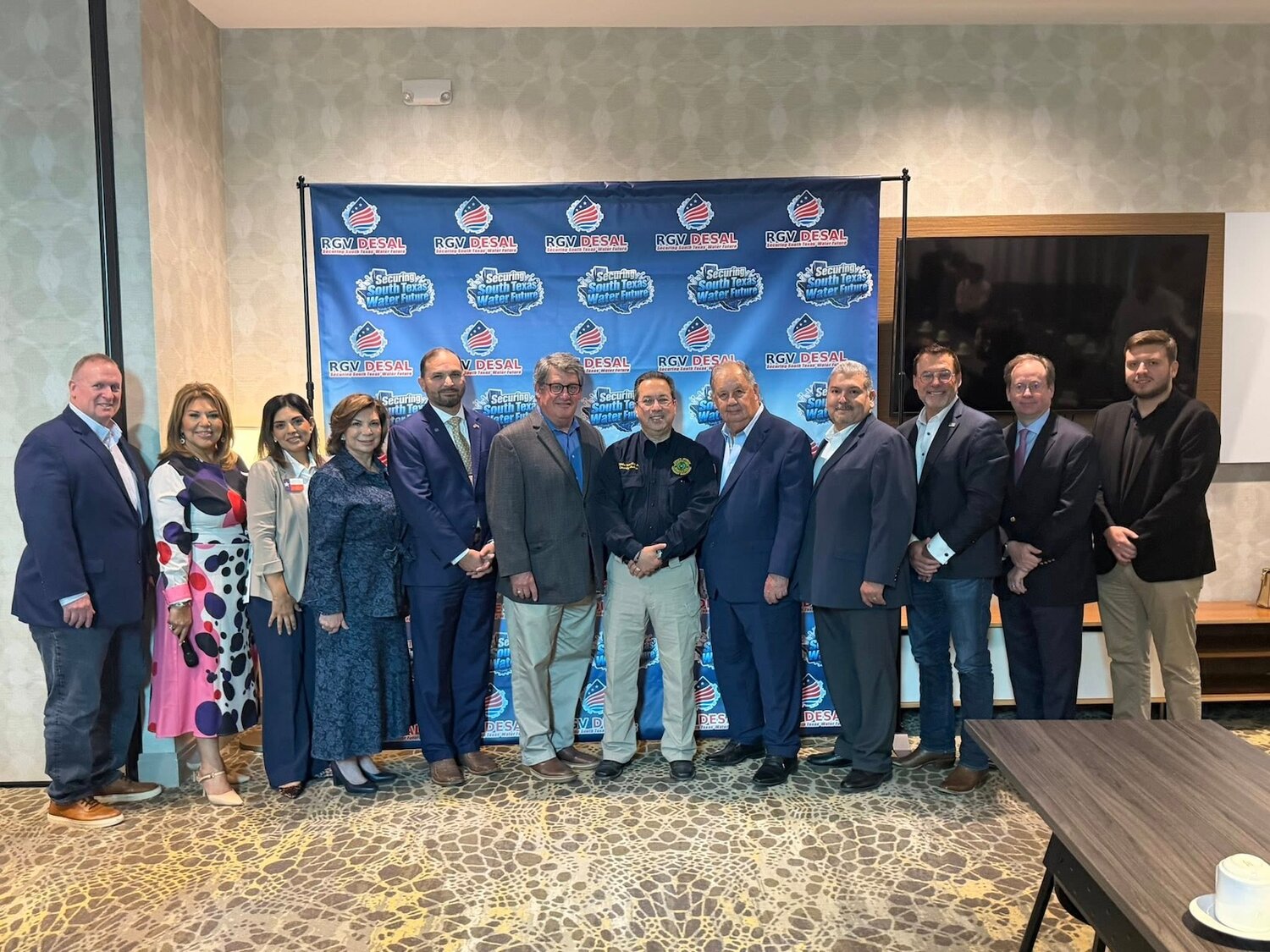
Thank all of you for being here on what we think is a very exciting day. I want to tell you a little bit about IDE and then describe to you what we've done around the world and how we're prepared to bring our experience to the Rio Grande Valley.
IDE was started in the early 1960s. Israel was a young nation, it was growing fast, and our water source was one river and one lake. And so we have quite the similarity with the Rio Grande Valley.
We had started out in a small way with brackish water desal, but as the country grew and our shared river was being shared with others who had growing economies, we faced in that country the same thing that we currently have here in the Rio Grande Valley.
We knew we were going to have to take the next step - large scale seawater desal. That’s the period when we began to build plants along the Mediterranean coast. And IDE, we designed those plants and we operated them, to be able to supply water to the citizens of Israel, and with the reuse water that comes out of that, agriculture in Israel.
So, we were in a very similar situation (to the Rio Grande Valley). We had in that country, the River Jordan. Many of us learned about that at Mass and in Sunday school, quite the river. That had been the only source of water for the State of Israel. And while I learned about the Holy aspect of the River Jordan, we Texans believe the Rio Grande river is kind of a Holy river too.
So, we could not continue to rely on that. We began to diversify and build these (desal) plants. And so that's where we learned what we have now, about how to build large scale plants in environmentally sensitive, important areas. And that expertise we bring to the table.

As you can see here (points to a slide), it has been done throughout the region. In the Middle East, Saudi Arabia would not exist today without their seawater desal. Australia, we built a plant there. They went 15 years ago through a drastic drought, and had to hurry and put in place desel plants there. That’s where we built one of our first modular format plants in Western Australia, and did that in Israel.
As you look down here, we have plants. This is a plant called, Sorek. There are two side by side plants there. Those are both over 150 million gallons a day, just those two plants. We're finishing one of those. We started on another one in northern Israel, a very interesting thing. It will supply the northern part of the country and help refill the Sea of Galilee. And so that plant we're calling the sister plant to the Rio Grande Valley. It's near the beach. It's about the same size as what we're looking (at here). So, we feel a common bond with what you're facing now, because as a country, Israel went through the same thing. Now down here in the corner is a plant in Carlsbad (California). It is 54 million gallons a day and the key thing here, the key point we want to make in the Valley, our customer there is the San Diego County Water Authority, a public entity that supplies water to all the utilities in San Diego County.
We supply 12% of their water. So, we're not the only source of water, and as we come here to the Valley, we’re excited to work with a lot of the people in this room who are great at their water business here. We will be an alternative, new, resilient source of water for them to combine with their current surface water, the groundwater they have, the other new projects that are underway now for brackish groundwater. We are very excited to be part of what is the most exciting thing happening in Texas water. The Rio Grande Valley is going to be the most water diverse, water ready region in the state of Texas.
Surface water, groundwater and ocean/sea water. Nobody has done that. It's an exciting thing to be part of. We're thrilled to be here. As you look around the world, too, one of the main things we want people to understand is that this is not new technology. It's been done by us and others throughout the world, and we're just getting there. As our economies grow, as we have stress where we've got shared rivers and prosperous economies growing, we've got to be able to help and make communities water-ready. And so whether it be the Port of Brownsville, the Port of Harlingen, or McAllen, or any of them, people in this community here are going to be able to go out and recruit industry and say, if you come to the Valley, we are ready. So, it's an exciting thing for us to be part of.
What does one of these things look like? This is in Carlsbad, and that's a 50 million gallon a day plant. We put it on less than six acres, and there's the open ocean there, and we're excited about that as an example. We have a new fourth way to build plants in a modular format. And what we're looking at doing here is to be able to start with one size but… as you recruit new industry and communities grow, you can add capacity to it as it goes along. And the key thing is we will not be a utility. We will be a water supplier to your existing utilities. You will work with your utilities. We will work with them in the design and operation of the plant and getting the quality of water we need.
The other things that we want to do is… part of becoming a good corporate citizen… we’re going to be looking to train the workforce. Jobs in these plants are high-skilled, high-wage jobs. We have already started discussions with the Texas A&M TEEX facility that's out here in the Port of Brownsville. Southmost College, we have visited with them. We're going to train the best water operators in the state, here in the Rio Grande Valley. And so we're excited about being part of that. And we’re going to be bringing some Israelis to the Rio Grande Valley who've never been here. We're going to show them your hospitality. And so we're excited to be part of that.
Editor's Note: The above remarks were made by Mark Ellison, regional sales director for IDE Technologies, at a press conference held at the Hilton Garden Inn in Harlingen on April 23. The press conference was called to announce plans to build a $1 billion seawater dealination plant on South Padre Island. It will be built and operated by RGV Desal, a new company former by IDE and US Desalinaton.


