


MISSION, Texas — For years, municipal leaders and state lawmakers across South Texas have voiced frustration over highway design standards that left main regional corridors passable while submerged frontage roads paralyzed local traffic and emergency responders.
The head of the Texas Department of Transportation’s Pharr District now says those days are officially behind the agency.
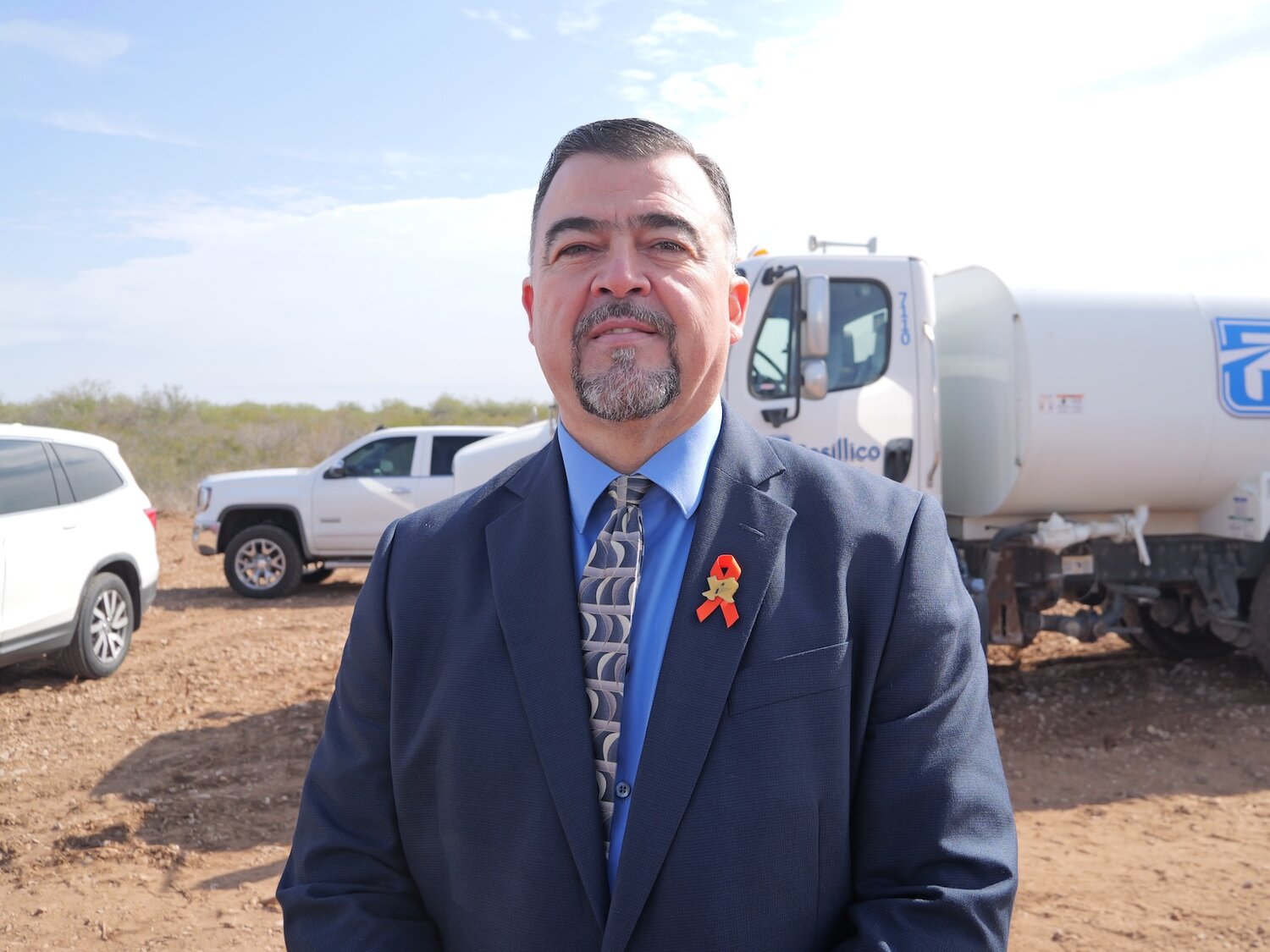
Addressing a regional infrastructure forum hosted by the Rio Grande Valley Partnership at the Mission Events Center on Oct. 20, 2026, TxDOT Pharr District Engineer Pedro "Pete" Alvarez directly tackled past criticisms, stating unequivocally that highway planning and regional drainage can no longer be separated.
"Folks: there has been a misconception and let me try and clarify that," Alvarez told forum attendees during a panel discussion. "In the past there may have been terms like, 'We're in the roadway business. We're not in the drainage business.' Those days are long gone. If we're building roads, we're affecting drainage."
Alvarez revealed that TxDOT's top technical experts are actively working with local engineers in the Rio Grande Valley to evaluate systemic flooding vulnerabilities across the region.
"In fact, this week we have our state hydrologic engineer visiting with us," Alvarez said, pointing out that agency engineers were meeting at the Pharr District office concurrently with the forum. "We're looking at the flooding situation that we have in the Valley."
The district engineer pointed to ongoing collaboration on Project 768, commending local leadership and county officials for advancing regional solutions. However, Alvarez emphasized that the Valley's flat topography presents steep engineering hurdles when moving large volumes of stormwater toward coastal outlets.
"When you start looking at topography, you start looking at the drop: 1 foot to five miles," Alvarez explained. "That means sheet flow, that means a lot. There are a lot of challenges that we're facing."
The district engineer's comments come amid renewed scrutiny over recurring flooding bottlenecks along Interstate 2/Expressway 83.
Mid-Valley leaders, led by state Rep. Armando "Mando" Martinez, D-Weslaco, have long pointed out that severe rainstorms routinely submerge I-2 frontage roads in Hidalgo County, leaving drivers unable to safely exit the main lanes and preventing emergency vehicles from accessing vital evacuation corridors.
Martinez, who serves as Vice Chair of the House Committee on Natural Resources, recently noted that persistent pushback against the old agency line—that TxDOT was strictly in the highway business—has finally yielded progress, with state transportation officials now redesigning problem stretches along the frontage roads.
During the Mission panel, Alvarez acknowledged that during major storm events, emergency management calls immediately go out to state entities like the Texas Division of Emergency Management (TDEM) and the Department of Public Safety (DPS), placing transportation infrastructure at the center of disaster response.
"The challenge that we have is we need to look at an opportunity to figure out how we're going to move the water to its ultimate outfall," Alvarez said. "If a project is inland, if you will, and it has to travel 50, 60 miles, what is that path? If we're working on a project, it doesn't only look at the drainage data for that particular project. How do we drain all the interceptor roadways and the land?"
He stressed that state corridors do not exist in isolation from the communities surrounding them.
"That's not just a roadway project," Alvarez said. "Let's say it's a state road that we are responsible to maintain, right, but it's also draining the communities, the city and the county areas. How do we figure out a way to get that water to the ultimate outfall?"
To solve bottlenecking along major transportation arteries like Interstate 2, Alvarez advocated for a comprehensive, system-wide engineering approach rather than localized fixes.
"I would like to think, from an engineer's perspective, build it from the bottom up," Alvarez said. "If the outfall is the Arroyo Colorado, the North Main Drain, or whatever the case may be, what are we doing to the entire system?"
He cautioned that expanding upstream drainage without expanding downstream capacity creates immediate hazards for local property owners.
"One thing that we have to recognize is if we put all that water in a ditch that has a constraint—let's say it's two 8-by-8 boxes underneath the interstate and then it hits south and it hits a railroad along Expressway 83—what's going to happen?" Alvarez warned. "Everybody between the expressway, if you will, and business is going to flood out."
Alvarez concluded his remarks by urging city and county officials across the Rio Grande Valley to partner with TxDOT early in the project design phase to leverage public funding effectively.
"We need to look at the ultimate destination and figure out ways that we can improve the entire system and not just next to that particular property," Alvarez said. "We're open for business, as they say. Let's talk. Let's figure out a way to make that happen and let's utilize the funding in a wise manner as we look at overall drainage needs."


